Memphis-Arkansas Speedway
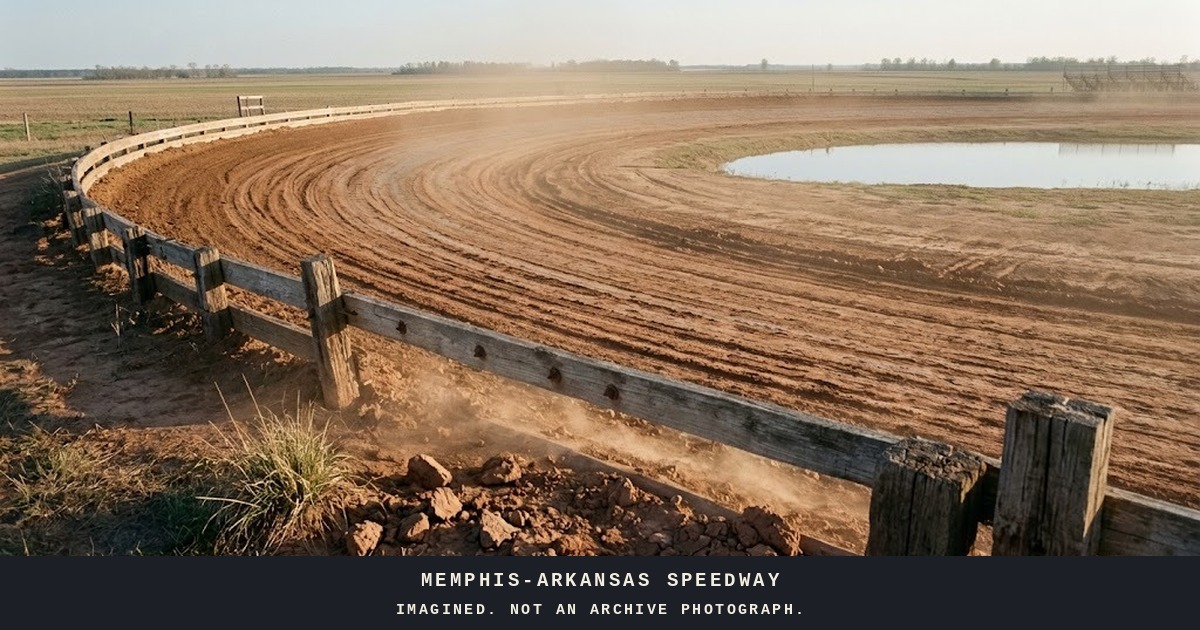
NASCAR never ran on anything else like it. A mile and a half of dirt in the Arkansas bottomland near Lehi, shaped like a paper clip, with long straights running into turns banked high on soil dug out of two ponds at either end. It was the longest track the series visited in the 1950s and it remains the longest dirt oval NASCAR has ever raced on. Only Darlington and the beach course at Daytona ran faster.
Five Grand National races were held there between 1954 and 1957. Fifty-two cars took the green for the first one. The surface was the problem from that day forward: heavy cars chewed the clay into a dust storm thick enough to stop the racing for long stretches, and the track kept swallowing the money it would have taken to fix it. Qualifying speeds still touched a hundred miles an hour.
Two drivers were killed on the same June weekend in 1956, Clint McHugh in a qualifying crash that put his car in the lake fifty feet below the third turn, and Cotton Priddy in the race the following day. The owners could not raise the hundred thousand dollars it would have cost to pave it. The last race ran in July 1957. They sold the land to a farmer the next year, who raised catfish in the flooded infield and then leveled the banking for rice and soybeans.
- https://encyclopediaofarkansas.net/entries/memphis-arkansas-speedway-12145/
- https://en.wikipedia.org/wiki/Memphis-Arkansas_Speedway
- https://www.thedrive.com/accelerator/40096/the-lost-story-of-memphis-arkansas-nascars-only-dirt-superspeedway
- https://macsmotorcitygarage.com/nascars-lost-dirt-superspeedway/
- https://theclio.com/entry/13011