The dew doesn't care that the season is winding down. Seven in the morning and it soaks straight through my shoes, cold enough to clear the fog out of my head.
My hands have smelled like vinegar and hot glass and corn silk for two weeks now. Shoulders sore from hauling the canner off the range. Thumbs stained dark from putting up bushels until the kitchen walls sweat.
Everything I've carried across the threshold lately had a job. Sit in a dark cupboard. Wait out the frost. Keep us fed when the wind comes hard off the ridge. Honest work. It also turns every day into a ledger.
Then you get to the ragged edge where the garden gives up and the pasture starts, and the flowers are just standing there.
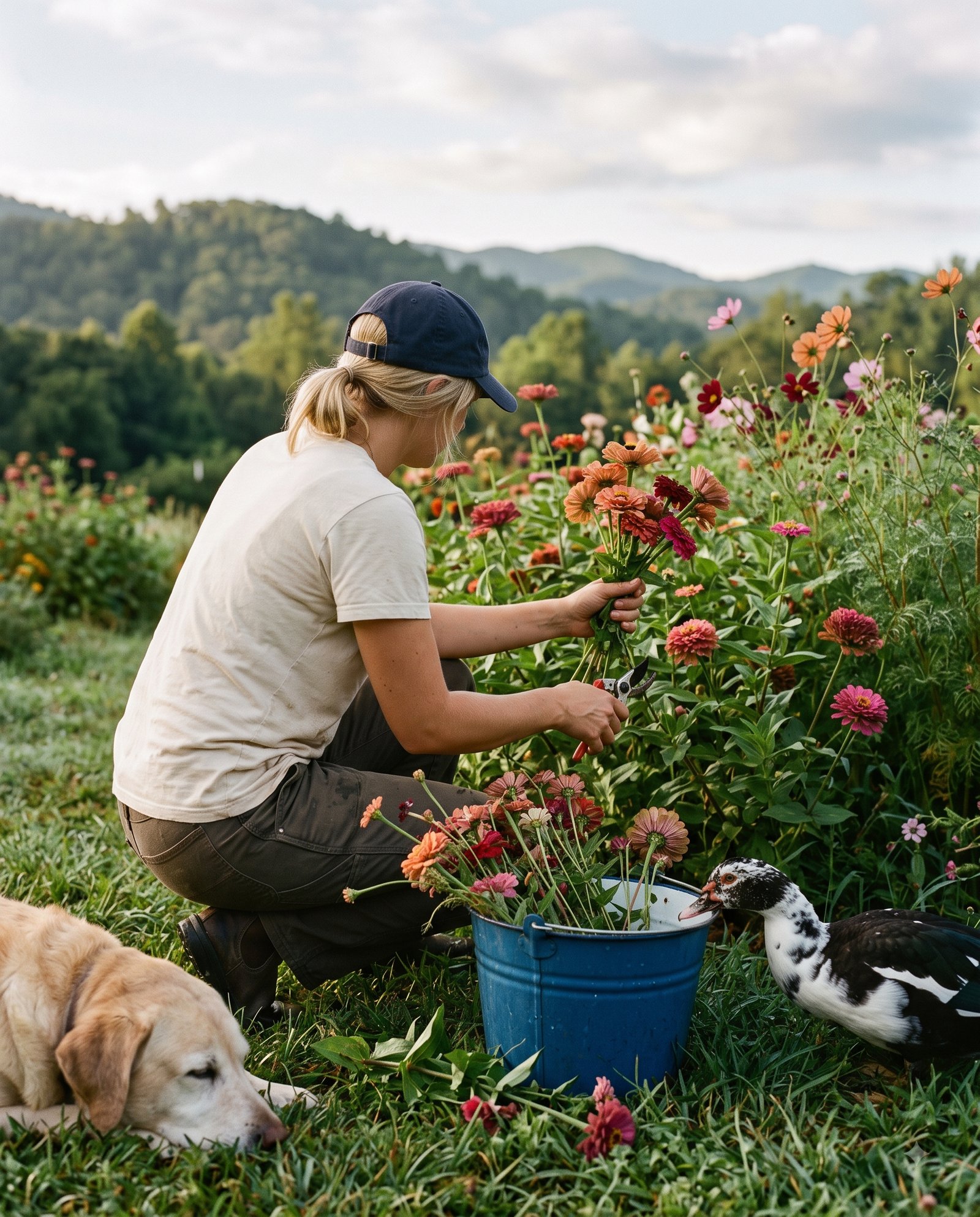
They aren't useful. You can't seal a cosmos in a jar. You can't boil a zinnia down into anything worth a winter. They stand thick-stemmed and stubborn, magenta and orange and blush, bright enough to hurt against the corn drying down behind them.
The shears cut clean and wet through a cosmos stem. A yellow zinnia drops into the crook of my arm, its head stiff as cardboard, tough enough to take a frost and not notice.
My thumb strips the low leaves so they won't sour the water in the pitcher. No pot to watch. No timer counting down. No steam climbing the walls of a kitchen that is already too hot.
There's a hard arithmetic to this stretch of the year, where nearly everything you do has to pay for itself in calories or winter comfort. You get so far into the rhythm of husks and salt and wet denim on the line that you forget the other half of the trade. Not everything you bring in from the dirt has to earn its keep.
Some of what you keep, you keep just to look at.
Then back through the wet grass with an armful of flowers that will do nothing but sit on the table. For the first time in two weeks, my hands feel light.